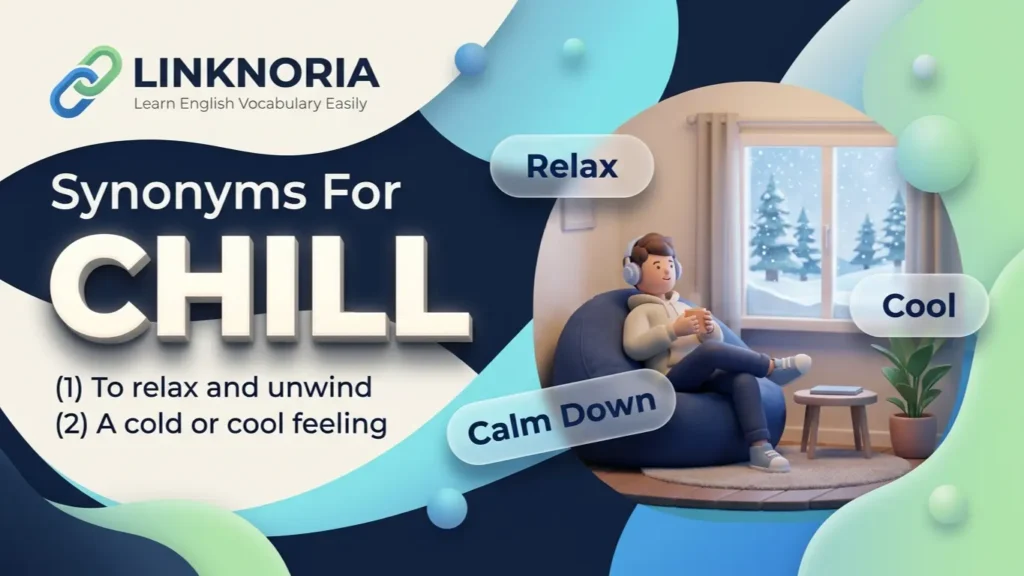
Picture a Sunday afternoon with no alarms and no deadlines. Your friend relaxes in a hammock, sips cold lemonade, and watches the clouds drift by. Nothing feels urgent, and everything feels easy.
People often use chill in everyday conversation to describe relaxed people, peaceful moods, casual plans, and comfortable places. A chill friend does not get upset over every small problem. A chill evening might include soft music, good food, and no busy schedule.
However, repeating the same slang word can make your writing sound flat. Choosing a more precise alternative helps readers understand the exact feeling you want to describe.
This article explains 30 useful synonyms for chill, including their meanings, examples, and best uses. You will learn which words describe calm people, peaceful places, relaxed moods, and unhurried activities.
What Are Synonyms for Chill?
The most useful synonyms for chill include relaxed, laid-back, easygoing, calm, mellow, carefree, peaceful, serene, unbothered, and low-key.
The best alternative depends on the context. Use relaxed for someone free from tension, laid-back for a person who rarely rushes, serene for deep peacefulness, and low-key for a quiet event without much fuss.
After the exam, Sara felt relaxed and slept for ten hours.
We planned a low-key birthday dinner with a few close friends.
30 Synonyms for Chill
| No. | Synonym | Part of Speech | Simple Meaning |
|---|---|---|---|
| 1 | Relaxed | Adjective | Free from tension or worry |
| 2 | Easygoing | Adjective | Tolerant and relaxed by nature |
| 3 | Laid-back | Adjective | Casual and not easily stressed |
| 4 | Mellow | Adjective | Gentle, soft, and pleasant |
| 5 | Calm | Adjective | Peaceful and not upset |
| 6 | Carefree | Adjective | Free from worries or responsibilities |
| 7 | Unbothered | Adjective | Not troubled by something |
| 8 | Serene | Adjective | Deeply peaceful and undisturbed |
| 9 | Tranquil | Adjective | Quiet and peaceful |
| 10 | Peaceful | Adjective | Free from disturbance or conflict |
| 11 | At ease | Phrase | Comfortable and not nervous |
| 12 | Low-key | Adjective | Quiet, simple, and not showy |
| 13 | Cool | Adjective | Calm under pressure |
| 14 | Composed | Adjective | Emotionally controlled |
| 15 | Unflappable | Adjective | Not easily upset or rattled |
| 16 | Breezy | Adjective | Casual, light, and carefree in manner |
| 17 | Chillaxed | Adjective | Extremely relaxed; informal slang |
| 18 | Zen | Adjective | Calm and mindful; informal usage |
| 19 | Comfortable | Adjective | At ease physically or socially |
| 20 | Unhurried | Adjective | Moving without rushing |
| 21 | Leisurely | Adjective | Done slowly for enjoyment |
| 22 | Nonchalant | Adjective | Appearing casually unconcerned |
| 23 | Blasé | Adjective | Unimpressed through familiarity |
| 24 | Restful | Adjective | Helping someone rest |
| 25 | Soothing | Adjective | Having a calming effect |
| 26 | Stress-free | Adjective | Free from stress or pressure |
| 27 | Happy-go-lucky | Adjective | Cheerful and not easily worried |
| 28 | Footloose | Adjective | Free from commitments or restrictions |
| 29 | Unworried | Adjective | Not anxious or concerned |
| 30 | Casual | Adjective | Relaxed and informal |
Detailed Synonyms for Chill
1. Relaxed
Meaning: A relaxed person feels free from tension, pressure, or worry. This is one of the closest everyday alternatives to chill.
After yoga, Mina felt relaxed and ready for lunch.
His relaxed shoulders showed that the massage had helped.
Best use: Describe a calm body, peaceful mind, or comfortable social situation.
2. Easygoing
Meaning: An easygoing person is tolerant, flexible, and not easily upset by minor problems.
Our easygoing teacher handled small mistakes with patience.
Her easygoing nature made family trips more enjoyable.
Best use: Describe someone’s friendly personality rather than a single moment of calm.
3. Laid-back
Meaning: A laid-back person has a casual attitude and does not get stressed easily.
The laid-back surfer waited patiently for the right wave.
Their laid-back office allows employees to dress casually.
Best use: Informal conversations about relaxed people, lifestyles, workplaces, or social settings.
4. Mellow
Meaning: Mellow describes a gentle, pleasant, and sometimes slightly subdued mood, sound, or atmosphere.
Mellow jazz played softly during dinner.
After a long walk, he felt mellow and sleepy.
Best use: Describe gentle moods, music, voices, and pleasant atmospheres.
5. Calm
Meaning: Calm means peaceful and not emotionally upset, excited, or disturbed.
She kept a calm voice during the heated debate.
The calm lake reflected the pink evening sky.
Best use: Describe people, emotions, situations, and places without unnecessary excitement or disturbance.
6. Carefree
Meaning: Carefree describes someone who feels free from worry or a situation that seems pleasantly free from concerns.
The carefree children played in the park until sunset.
He remembered a carefree summer spent cycling along the coast.
Best use: Describe enjoyable experiences and lighthearted moods. Carefree does not necessarily mean that someone has no responsibilities.
7. Unbothered
Meaning: Unbothered describes someone who is not troubled or visibly upset by a particular situation.
She remained unbothered by the criticism on social media.
He looked unbothered when his friends teased him.
Best use: Informal conversations about someone who does not let criticism, teasing, or minor problems affect them. It can also imply indifference.
8. Serene
Meaning: Serene means deeply peaceful, quiet, and free from visible disturbance.
The serene garden helped visitors forget the noise of the city.
Her serene expression remained unchanged throughout the meditation session.
Best use: Describe peaceful scenery, expressions, moods, and environments. The word often sounds more literary than chill.
9. Tranquil
Meaning: Tranquil describes a quiet, peaceful place or situation with little disturbance.
The tranquil village stood far from busy highways.
We enjoyed a tranquil morning beside the lake.
Best use: Nature writing, travel descriptions, and peaceful settings. It is more formal than chill.
10. Peaceful
Meaning: Peaceful means free from conflict, noise, or disturbance.
Peaceful music helped the baby fall asleep.
They spent a peaceful evening reading by the fireplace.
Best use: Describe places, activities, relationships, and moods that feel quiet or free from conflict.
11. At Ease
Meaning: At ease means feeling comfortable, relaxed, or free from nervousness.
The guest felt at ease within minutes of arriving.
He looked at ease while answering the interviewer’s questions.
Best use: Describe comfort in social situations, interviews, meetings, and unfamiliar surroundings.
12. Low-Key
Meaning: Low-key describes something simple, quiet, or deliberately not attention-seeking.
They planned a low-key birthday dinner with close friends.
We had a low-key weekend at home instead of going out.
Best use: Describe casual parties, celebrations, plans, and lifestyles. In informal speech, it can also mean somewhat or secretly, as in “I’m low-key excited.”
13. Cool
Meaning: Cool can describe someone who stays calm under pressure or appears relaxed and confident.
The goalkeeper stayed cool during the penalty shootout.
She gave a cool response to the rude question.
Best use: Informal conversations about confidence, composure, and staying calm in difficult moments. Cool can also mean fashionable or impressive, depending on context.
14. Composed
Meaning: Composed describes someone who keeps control of their emotions, especially during a difficult situation.
The composed speaker answered every difficult question clearly.
He remained composed after losing the final match.
Best use: Describe emotional control in interviews, arguments, public speaking, and stressful situations. It is more formal than chill.
15. Unflappable
Meaning: Unflappable describes someone who remains calm even when problems or unexpected events occur.
The unflappable pilot followed the emergency procedures carefully.
Her unflappable manner impressed the entire newsroom.
Best use: Describe people who handle pressure without becoming visibly upset. It is more precise than chill when stress is involved.
16. Breezy
Meaning: Breezy can describe a light, casual, and cheerful manner that makes something feel easy and informal.
Her breezy greeting made the morning meeting feel friendlier.
He gave a breezy answer and quickly changed the subject.
Best use: Describe a person’s manner, conversation, or writing style. Breezy can sometimes suggest that someone is treating a serious matter too lightly.
17. Chillaxed
Meaning: Chillaxed is an informal blend of chill and relaxed, meaning very relaxed.
After the beach trip, Dan felt completely chillaxed.
She spent a chillaxed Sunday reading books and drinking tea.
Best use: Playful conversation, casual captions, and informal messages. Avoid it in formal essays or professional reports.
18. Zen
Meaning: Zen is sometimes used informally to describe a calm, balanced, and mindful state of mind.
The quiet room helped her feel more zen before the presentation.
He maintained a zen attitude during the long delay.
Best use: Casual descriptions of mindfulness, peaceful surroundings, or emotional balance. The word also refers to a Buddhist tradition, so it should not be treated as simply another word for chill in every context.
19. Comfortable
Meaning: Comfortable describes someone who feels physically relaxed, socially accepted, or emotionally at ease.
She felt comfortable talking with her new classmates.
The comfortable chair made the long reading session easier.
Best use: Describe physical comfort or confidence in a situation. It is not always interchangeable with chill because it can refer to physical ease rather than a relaxed personality.
20. Unhurried
Meaning: Unhurried means moving or acting without rushing.
They enjoyed an unhurried breakfast on the balcony.
His unhurried walk gave him time to notice every flower.
Best use: Describe a relaxed pace, a slow morning, or an activity without time pressure.
21. Leisurely
Meaning: Leisurely describes an activity done at a comfortable pace, usually for pleasure rather than speed.
We took a leisurely stroll through the old market.
She enjoyed a leisurely swim before sunset.
Best use: Describe walks, meals, swims, visits, and other activities that people enjoy without rushing.
22. Nonchalant
Meaning: Nonchalant describes someone who appears casually unconcerned about something.
He gave a nonchalant shrug when asked about his sudden fame.
Her nonchalant reply made it seem as if the problem did not matter.
Best use: Describe a casual appearance or reaction. Unlike relaxed, nonchalant can suggest indifference or an attempt to hide one’s true feelings.
23. Blasé
Meaning: Blasé describes someone who is unimpressed or no longer excited by something because they have experienced it many times.
The blasé critic seemed unimpressed by the famous performance.
She sounded blasé about meeting another movie star.
Best use: Describe boredom or a lack of enthusiasm caused by familiarity. Blasé is not a general synonym for peaceful or relaxed and can sound critical.
24. Restful
Meaning: Restful describes something that encourages rest, relaxation, or recovery.
The restful cabin offered quiet surroundings and comfortable beds.
A restful nap helped him feel refreshed before dinner.
Best use: Describe sleep, breaks, holidays, rooms, and environments that help people rest.
25. Soothing
Meaning: Soothing describes something that reduces distress, tension, or discomfort.
Soothing rain sounds helped him fall asleep.
Her soothing voice comforted the crying toddler.
Best use: Describe music, sounds, voices, words, or actions that make someone feel calmer. It usually describes the effect something has on a person rather than the person’s personality.
26. Stress-Free
Meaning: Stress-free describes an experience, period, or environment with little or no stress.
They planned a stress-free holiday with plenty of free time.
Her stress-free morning began with coffee and a quiet breakfast.
Best use: Describe holidays, routines, plans, and activities designed to reduce pressure. In everyday life, stress-free often means low-stress rather than completely free of every problem.
27. Happy-Go-Lucky
Meaning: Happy-go-lucky describes a cheerful person who tends not to worry much about everyday problems.
The happy-go-lucky student laughed off a small mistake.
His happy-go-lucky personality made road trips more enjoyable.
Best use: Describe cheerful personalities. Unlike calm, this phrase emphasizes a positive, carefree attitude.
28. Footloose
Meaning: Footloose means free from restrictions, responsibilities, or commitments that limit one’s freedom.
After graduation, she enjoyed a footloose summer of travel.
The footloose traveler explored new cities without a fixed schedule.
Best use: Describe freedom, travel, and an independent lifestyle. Footloose is not a direct synonym for calm; it emphasizes freedom from commitments.
29. Unworried
Meaning: Unworried means not feeling anxious or concerned about a particular situation.
He remained unworried despite the delayed flight.
She looked unworried while waiting for the results.
Best use: Describe a lack of concern. Relaxed is often more natural when you mean that someone feels physically and mentally at ease.
30. Casual
Meaning: Casual describes something informal, relaxed, or not overly serious.
We had a casual dinner at home instead of visiting a fancy restaurant.
His casual manner made the conversation feel comfortable.
Best use: Describe clothes, conversations, gatherings, attitudes, and informal settings. Casual does not always mean calm; it often emphasizes informality.
Antonyms of Chill
Antonyms are words with opposite or contrasting meanings. The best opposite depends on whether chill refers to a mood, a person’s behavior, or the pace of an activity.
| Antonym | Meaning | Example |
|---|---|---|
| Tense | Unable to relax | She felt tense before the interview. |
| Stressed | Under mental or emotional pressure | He felt stressed about the deadline. |
| Anxious | Worried or nervous | She grew anxious while waiting for the call. |
| Uptight | Too worried or strict about things | He seemed uptight about the small mistake. |
| Restless | Unable to relax or stay still | The restless child kept walking around. |
| Frantic | Extremely hurried or panicked | They made a frantic search for the keys. |
| Nervous | Worried or uneasy | I felt nervous before speaking on stage. |
| Agitated | Upset, disturbed, or excited | He became agitated during the argument. |
| Hectic | Full of rushed activity | Monday was hectic at the office. |
| Hyper | Extremely energetic or excited | The children were hyper after the party. |
When to Use Which Synonym
| Synonym | Best Used When | Example Situation |
|---|---|---|
| Relaxed | Someone feels free from tension | Resting after yoga |
| Easygoing | A person is tolerant and flexible | Describing a friendly teacher |
| Laid-back | Someone has a casual attitude | Talking about a relaxed friend |
| Calm | Someone is not upset or excited | Answering a difficult question |
| Carefree | Someone feels free from worry | Enjoying a summer holiday |
| Serene | A scene or mood feels deeply peaceful | Describing a quiet garden |
| Low-key | An event is simple and informal | Planning a small birthday dinner |
| Composed | Someone controls their emotions | Speaking during a crisis |
| Unhurried | An activity has no rush | Enjoying a slow breakfast |
| Leisurely | An activity is done for pleasure | Taking a walk through town |
| Nonchalant | Someone appears unconcerned | Reacting casually to a comment |
| Soothing | Something makes another person feel calmer | Listening to gentle music |
| Stress-free | An experience has little pressure | Planning a relaxed weekend |
| Casual | Something is informal | Having a relaxed conversation |
| Footloose | Someone is free from commitments | Traveling without a fixed schedule |
Affixation Pattern and Word Origin
The base word chill does not need a prefix or suffix to stand alone. English forms related words by adding endings or combining the word with other elements.
- Base word: chill
- Prefix: None in the ordinary base form
- Suffixes: -ed in chilled, -ing in chilling, and -s in chills
- Related adjective: chilly
- Comparative of chilly: chillier
- Superlative of chilly: chilliest
The word chill is historically connected with Old English ciele, meaning cold or coldness. Its modern uses include the physical sense of cold, the verb meaning to make something cold, and informal expressions associated with relaxing or remaining calm. The relaxed slang sense developed through the idea of cooling down or becoming less tense.
Word Formation and Pronunciation
| Form | Part of Speech | Meaning or Use |
|---|---|---|
| Chill | Noun | A feeling of cold; also a cold sensation |
| Chill | Verb | To make something cold or to relax informally |
| Chill | Adjective | Relaxed or informal in slang |
| Chills | Plural noun or verb | Cold sensations; or the third-person form of the verb |
| Chilled | Past-tense verb or adjective | Made cold; or relaxed in informal use |
| Chilling | Present participle or adjective | Making cold; or causing fear, depending on context |
| Chilly | Adjective | Somewhat cold |
| Chillier | Comparative adjective | Colder than something else |
| Chilliest | Superlative adjective | The coldest within a group |
US pronunciation: /tʃɪl/
UK pronunciation: /tʃɪl/
Number of syllables: One
Remember that chilly, chillier, and chilliest usually describe degrees of cold. When chill means relaxed, speakers often use more chill and most chill in informal English.
Prototype Meaning of Chill
When people use chill to describe a person or situation, they often imagine someone who is comfortable, calm, and not in a hurry. The person might sit with a drink, listen to music, or enjoy a conversation without worrying about every small problem.
The central idea is a lack of unnecessary tension. A chill person can still work hard, keep promises, and handle important responsibilities. A chill atmosphere can still be lively and enjoyable, provided it does not feel overly stressful or demanding.
However, the exact meaning changes with context. A chill person may be easygoing, a chill evening may be peaceful, and a chill plan may be casual. Understanding these differences helps you select a more accurate synonym instead of replacing every use of chill with the same word.
Prototype Categorization
1: Calm Moods
Relaxed, calm, serene, peaceful, and at ease describe different forms of comfort or quietness. Relaxed is a useful everyday choice, while serene often suggests deeper peace.
2: Easygoing Personalities
Easygoing, laid-back, unbothered, unflappable, and happy-go-lucky describe people who tend not to become upset over minor problems. Each word has a different emphasis: tolerance, casual behavior, indifference, steadiness, or cheerfulness.
3: Slow and Comfortable Activities
Unhurried, leisurely, restful, and comfortable suit situations involving rest, ease, or a relaxed pace. Use leisurely for an enjoyable activity and restful for something that helps you recover.
4: Casual Attitudes
Low-key, cool, casual, breezy, and nonchalant describe informal behavior or a relaxed appearance. Nonchalant can imply indifference, while low-key often means simple or not showy.
5: Calm Sounds and Environments
Mellow, tranquil, soothing, and stress-free fit certain peaceful experiences. Mellow often describes sounds or moods, tranquil describes quiet settings, and soothing describes something that reduces tension.
6: Freedom and Carefree Feelings
Carefree, unworried, and footloose connect with freedom from concerns or restrictions. Carefree emphasizes freedom from worry, unworried emphasizes a lack of concern, and footloose emphasizes independence from commitments.
These categories are practical guides, not strict linguistic rules. A word may fit more than one category, and the best choice always depends on the sentence.
Common Mistakes When Using Chill
1. Treating Every Synonym as Interchangeable
Serene and footloose do not mean the same thing. Serene describes deep peace, while footloose describes freedom from restrictions or commitments.
2. Using Informal Slang in Every Situation
Words such as chillaxed may work in a text message but sound out of place in an academic essay. Use relaxed or calm when a more neutral word is needed.
3. Confusing Calmness With Laziness
A chill person is not necessarily lazy. Chill usually suggests a relaxed attitude, not a refusal to work or meet responsibilities.
4. Using Blasé to Mean Peaceful
Blasé means unimpressed or insufficiently interested, often because something feels familiar. It does not simply mean calm.
5. Confusing Soothing With Relaxed
A soothing sound helps someone become calm. A relaxed person already feels free from tension. The words describe different roles in a situation.
6. Using Footloose for Every Relaxed Person
Footloose focuses on freedom from commitments. Use laid-back for someone with a casual personality or relaxed for someone who feels comfortable.
7. Confusing Chill With Chilly
Chill can mean cold or relaxed, depending on context. Chilly usually describes cool weather or a cold environment.
8. Repeating the Same Word Too Often
Using chill in every sentence can make writing repetitive. Choose a more specific word that matches the mood, setting, or behavior you want to describe.
FAQ About Synonyms for Chill
What is another word for chill?
Relaxed is one of the closest everyday alternatives when chill means free from tension. Other choices include calm, laid-back, easygoing, and peaceful, depending on the sentence.
What does chill mean in slang?
In slang, chill usually means relaxed, calm, or easygoing. It can describe a person’s attitude, a peaceful atmosphere, or an informal activity. In some conversations, “chill” can also mean to relax or spend time casually.
Can I use chill in formal writing?
Chill is common in informal English, but it may sound too casual in formal writing. Depending on the meaning, use relaxed, calm, composed, or peaceful instead.
What is the difference between chill and relaxed?
Relaxed usually means free from physical or mental tension. Chill can carry the same meaning but often sounds more casual and conversational. Relaxed is generally the safer choice in formal writing.
Which synonym is best for a quiet party?
Low-key is an excellent choice for a small, simple gathering without much fuss. For example, “We had a low-key birthday dinner with close friends.”
Is chill only a slang word?
No. Chill also functions as a noun and verb relating to coldness. For example, a chill in the air means a feeling of cold, while to chill a drink means to make it cold. The relaxed adjective and verb uses are especially common in informal English.
What is the difference between laid-back and easygoing?
Laid-back emphasizes a casual attitude and a lack of stress or urgency. Easygoing emphasizes a tolerant personality that handles problems without becoming upset. The meanings overlap, but they are not identical.
What is a professional alternative to chill?
Calm, composed, and relaxed are useful professional alternatives. Composed works particularly well when someone maintains emotional control during a challenging situation.
What are some casual expressions similar to chill?
Expressions such as “take it easy” and “hang loose” can communicate a relaxed attitude in informal conversation. “Take it easy” can also mean not overworking yourself or saying goodbye, depending on context.
What is the opposite of chill?
The opposite depends on the intended meaning. Tense, stressed, anxious, and uptight are good opposites when chill means relaxed. Frantic or hectic may work when the focus is on a lack of calm or an excessively busy pace.
Topic Quiz: Synonyms for Chill
1. Which word best describes someone who stays calm during a penalty shootout?
A. Blasé
B. Cool
C. Footloose
D. Leisurely
2. Which synonym fits a simple birthday dinner with close friends?
A. Low-key
B. Unflappable
C. Serene
D. Mellow
3. Which word describes a deeply peaceful setting?
A. Breezy
B. Loose
C. Serene
D. Carefree
4. Which synonym describes a walk taken slowly for pleasure?
A. Unhurried
B. Unbothered
C. Composed
D. Chillaxed
5. Which word best describes someone who is free from commitments?
A. Soothing
B. Restful
C. Unworried
D. Footloose
6. Which word describes a person who is unimpressed because they have experienced something many times?
A. Relaxed
B. Blasé
C. Tranquil
D. Carefree
7. Which word describes something that helps calm a crying child?
A. Soothing
B. Footloose
C. Nonchalant
D. Casual
8. Which word best describes a person who remains emotionally controlled during a crisis?
A. Hyper
B. Composed
C. Carefree
D. Leisurely
9. Which word describes a person who is tolerant and flexible by nature?
A. Easygoing
B. Restful
C. Hectic
D. Frantic
10. Which word is most suitable for a formal description of a peaceful person who controls their emotions?
A. Chillaxed
B. Composed
C. Footloose
D. Happy-go-lucky
Answer Key
- B — Cool
- A — Low-key
- C — Serene
- A — Unhurried
- D — Footloose
- B — Blasé
- A — Soothing
- B — Composed
- A — Easygoing
- B — Composed
Conclusion
Choosing the right synonym for chill helps you express a more precise feeling, attitude, or situation. Relaxed works well for freedom from tension, laid-back describes a casual personality, serene suggests deep peace, and low-key fits simple events without much fuss.
The words in this guide do not all mean exactly the same thing. Some describe people, others describe places or activities, and a few emphasize freedom, indifference, or the ability to handle pressure. Understanding those differences makes your writing clearer and more natural.
Try using one new word in a conversation, caption, school assignment, or story today. Instead of repeating chill, choose the alternative that best matches what you want to say. With practice, you can make everyday English more varied, accurate, and expressive.

Mustansar Abbas is the author and founder of Linknoria.com, where he writes practical, well-researched guides on technology, productivity, and digital tools to help readers make smarter, more informed decisions.