Have you ever received a strange message that made you think something was not right? You might describe it as “sus.” This popular slang word appears in online chats, gaming conversations, social media comments, and everyday speech.
People use sus when someone acts suspiciously, a story sounds unbelievable, or a situation feels unusual. The word is short and casual, but repeating it can make your writing sound limited. Learning alternatives helps you describe exactly what seems wrong, from a dishonest person to a questionable activity.
This guide explores 30 synonyms and useful alternatives for sus, with simple meanings, practical examples, antonyms, pronunciation details, and tips for choosing the right word.
What Are Synonyms for Sus?
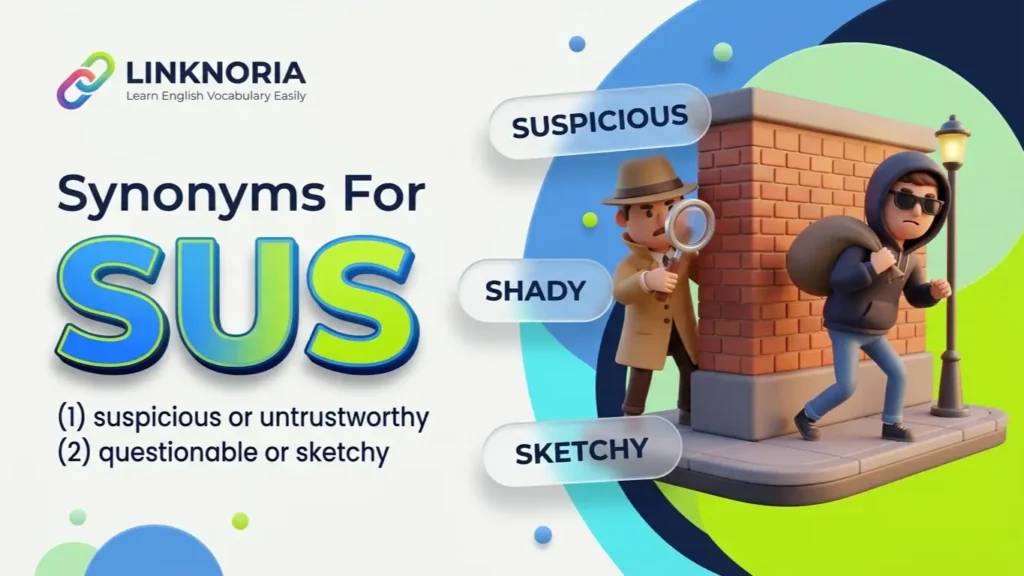
Common synonyms and alternatives for sus include suspicious, sketchy, shady, fishy, dodgy, dubious, questionable, suspect, untrustworthy, and suspicious-looking. Most describe something that seems dishonest, unsafe, unusual, or difficult to believe.
- Online chat: “That account looks sketchy.”
- Formal writing: “The manager noticed suspicious activity.”
The best alternative depends on the situation. Fishy suits a strange story, while untrustworthy describes someone who may not deserve your confidence.
Table of 30 Synonyms for Sus
| No. | Synonym | Part of Speech | Simple Meaning |
|---|---|---|---|
| 1 | Suspicious | Adjective | Making people feel doubt |
| 2 | Sketchy | Adjective | Seeming unsafe or dishonest |
| 3 | Shady | Adjective | Seeming dishonest or secretive |
| 4 | Fishy | Adjective | Seeming strange or dishonest |
| 5 | Dodgy | Adjective | Seeming unreliable or unsafe |
| 6 | Dubious | Adjective | Seeming doubtful or questionable |
| 7 | Questionable | Adjective | Causing doubt about honesty |
| 8 | Suspect | Adjective | Possibly dishonest or wrong |
| 9 | Untrustworthy | Adjective | Not deserving trust |
| 10 | Dishonest | Adjective | Not truthful or fair |
| 11 | Deceitful | Adjective | Intending to mislead others |
| 12 | Sneaky | Adjective | Acting secretly to gain an advantage |
| 13 | Underhanded | Adjective | Secretly unfair or dishonest |
| 14 | Secretive | Adjective | Unwilling to share information |
| 15 | Peculiar | Adjective | Unusual or strange |
| 16 | Odd | Adjective | Different from what seems normal |
| 17 | Weird | Adjective | Very unusual or strange |
| 18 | Strange | Adjective | Unfamiliar or unexpected |
| 19 | Off | Adjective | Not quite right |
| 20 | Fishy-looking | Adjective | Looking suspicious or unusual |
| 21 | Suspicious-looking | Adjective | Appearing potentially suspicious |
| 22 | Unusual | Adjective | Not common or expected |
| 23 | Questionable-looking | Adjective | Looking doubtful or concerning |
| 24 | Unreliable | Adjective | Not dependable |
| 25 | Shifty | Adjective | Appearing dishonest or evasive |
| 26 | Cagey | Adjective | Avoiding clear answers |
| 27 | Evasive | Adjective | Avoiding direct answers |
| 28 | Fraudulent | Adjective | Involving deliberate deception |
| 29 | Illegitimate | Adjective | Not lawful or properly authorized |
| 30 | Dubious-looking | Adjective | Looking doubtful or suspicious |
Detailed Synonyms for Sus
1. Suspicious
Meaning: Something is suspicious when it gives people a reason to doubt its honesty or safety.
Examples:
- The police noticed suspicious activity near the building.
- His sudden change of story seemed suspicious.
Usage Note: This is the closest standard English alternative to sus.
2. Sketchy
Meaning: Something is sketchy when it seems unsafe, unreliable, or dishonest.
Examples:
- I would not buy a phone from that sketchy website.
- The stranger gave me a sketchy explanation.
Usage Note: This informal word works well in casual conversations and online messages.
3. Shady
Meaning: A shady person or action seems dishonest or deliberately hidden.
Examples:
- The seller offered a shady deal with no receipt.
- My friend warned me about the company’s shady business practices.
Usage Note: Use shady when dishonesty or unfair behavior seems likely.
4. Fishy
Meaning: Something is fishy when it seems strange and makes you suspect a problem.
Examples:
- The email looked fishy, so I checked the sender.
- Something feels fishy about his excuse.
Usage Note: This is a natural choice for strange stories, messages, and explanations.
5. Dodgy
Meaning: Something dodgy seems unreliable, dishonest, or potentially unsafe.
Examples:
- We avoided a dodgy taxi service.
- He sent me a dodgy link that I refused to open.
Usage Note: Dodgy is especially common in British English.
6. Dubious
Meaning: Something dubious causes doubt about its truth, quality, or honesty.
Examples:
- The website made some dubious claims about its products.
- She questioned his dubious explanation.
Usage Note: This word sounds more formal than sus or fishy.
7. Questionable
Meaning: Something questionable gives people a reason to doubt whether it is right or acceptable.
Examples:
- The company used questionable methods to attract customers.
- His decision to hide the information was questionable.
Usage Note: Use it for actions, decisions, claims, and behavior that raise concerns.
8. Suspect
Meaning: Something suspect appears possibly dishonest, false, or unsafe.
Examples:
- The officer examined a suspect package.
- The report contained several suspect figures.
Usage Note: As an adjective, suspect means doubtful. As a noun, it can mean a person suspected of a crime.
9. Untrustworthy
Meaning: An untrustworthy person or source cannot easily be trusted.
Examples:
- I stopped sharing information with that untrustworthy seller.
- The website seemed untrustworthy because it hid its contact details.
Usage Note: This describes a lack of trust more directly than unusual behavior.
10. Dishonest
Meaning: A dishonest person does not tell the truth or act fairly.
Examples:
- The dishonest salesman lied about the product.
- She admitted that her answer had been dishonest.
Usage Note: Use this when there is evidence of lying or unfair behavior, not just a strange feeling.
11. Deceitful
Meaning: A deceitful person deliberately tricks others or hides the truth.
Examples:
- The deceitful advertisement promised results the product could not deliver.
- His deceitful behavior damaged their friendship.
Usage Note: This word suggests an intention to mislead.
12. Sneaky
Meaning: A sneaky person acts secretly, often to avoid being noticed or caught.
Examples:
- He made a sneaky attempt to read my messages.
- That sneaky trick gave the player an unfair advantage.
Usage Note: It can sound playful or critical, depending on the situation.
13. Underhanded
Meaning: Underhanded behavior uses secret and unfair methods.
Examples:
- The team complained about the rival’s underhanded tactics.
- She refused to take part in an underhanded business deal.
Usage Note: This is a stronger, more formal alternative for unfair or dishonest actions.
14. Secretive
Meaning: A secretive person avoids sharing information about their activities or plans.
Examples:
- He became secretive about where he was going.
- The secretive company rarely explained its decisions.
Usage Note: Being secretive does not automatically mean someone is dishonest.
15. Peculiar
Meaning: Something peculiar is unusual in a way that attracts attention.
Examples:
- I noticed a peculiar smell coming from the kitchen.
- Her peculiar answer left everyone confused.
Usage Note: This word describes unusual things without necessarily suggesting wrongdoing.
16. Odd
Meaning: Something odd seems different from what people normally expect.
Examples:
- It was odd that nobody answered the office phone.
- His odd behavior made his friends concerned.
Usage Note: Odd is simple and useful when something feels wrong but you cannot explain why.
17. Weird
Meaning: Something weird is strange, unusual, or difficult to understand.
Examples:
- A weird message appeared on my screen.
- That was a weird excuse for missing the meeting.
Usage Note: This casual word often works in texting and social media conversations.
18. Strange
Meaning: Something strange seems unfamiliar, unexpected, or unusual.
Examples:
- A strange car remained outside our house.
- Her strange reaction made me wonder what had happened.
Usage Note: Strange is broader than sus. It does not always suggest dishonesty.
19. Off
Meaning: Something feels off when it does not seem right or normal.
Examples:
- His story sounded off from the beginning.
- Something felt off about the payment request.
Usage Note: This short expression is common in everyday spoken English.
20. Fishy-Looking
Meaning: Something fishy-looking appears strange or potentially dishonest.
Examples:
- I ignored the fishy-looking advertisement.
- That fishy-looking package had no return address.
Usage Note: This is an understandable descriptive phrase, not a fixed one-word synonym.
21. Suspicious-Looking
Meaning: Something suspicious-looking appears unusual enough to cause concern.
Examples:
- The guard inspected a suspicious-looking bag.
- We reported a suspicious-looking vehicle near the entrance.
Usage Note: This phrase fits descriptions of objects, people, and places.
22. Unusual
Meaning: Something unusual is different from what commonly happens.
Examples:
- The customer made an unusual request.
- It was unusual for him to arrive so early.
Usage Note: An unusual event is not necessarily suspicious or dangerous.
23. Questionable-Looking
Meaning: Something questionable-looking appears doubtful or potentially concerning.
Examples:
- He showed us a questionable-looking document.
- I avoided the questionable-looking download link.
Usage Note: This descriptive phrase is understandable, but suspicious-looking usually sounds more natural.
24. Unreliable
Meaning: An unreliable person, source, or service cannot be depended on.
Examples:
- The unreliable seller kept changing the delivery date.
- We found that the online review came from an unreliable source.
Usage Note: Use this word when the main concern is dependability rather than dishonesty.
25. Shifty
Meaning: A shifty person appears dishonest or tries to avoid attention and questions.
Examples:
- The shifty salesman avoided explaining the extra fee.
- His shifty behavior made the customers uncomfortable.
Usage Note: This informal adjective often describes a person’s appearance or behavior.
26. Cagey
Meaning: A cagey person avoids revealing information or giving a clear answer.
Examples:
- She was cagey about the cost of the project.
- He became cagey when I asked about the missing money.
Usage Note: Being cagey can raise suspicion, but someone may simply want privacy.
27. Evasive
Meaning: An evasive person avoids answering a question directly.
Examples:
- The manager gave an evasive answer about the delay.
- His evasive replies made the interview difficult.
Usage Note: This word works well in formal writing and serious discussions.
28. Fraudulent
Meaning: Something fraudulent involves deliberate deception, often for money or personal gain.
Examples:
- The bank blocked a fraudulent payment.
- Investigators discovered a fraudulent insurance claim.
Usage Note: Use fraudulent when evidence supports a claim of fraud. It is much stronger than sus.
29. Illegitimate
Meaning: Something illegitimate lacks legal authority or proper recognition.
Examples:
- The bank rejected the illegitimate payment request.
- The organization challenged the illegitimate use of its name.
Usage Note: This word does not simply mean strange or suspicious. It relates to legality, authority, or accepted status.
30. Dubious-Looking
Meaning: Something dubious-looking appears doubtful or potentially suspicious.
Examples:
- I did not trust the dubious-looking offer.
- The customer asked questions about a dubious-looking invoice.
Usage Note: This phrase is understandable, but dubious or suspicious-looking is usually more natural.
Antonyms of Sus
The following words express trust, honesty, safety, or normal behavior. They can serve as opposites of sus, depending on the context.
- Trustworthy
- Honest
- Reliable
- Genuine
- Credible
- Legitimate
- Dependable
- Transparent
A trustworthy person deserves confidence. A legitimate offer follows proper rules. A genuine message is real rather than fake.
When to Use Which Synonym
| Synonym | Best Used When | Example Situation |
|---|---|---|
| Suspicious | Something raises concern | Unusual activity near a building |
| Sketchy | Something seems unsafe or unreliable | An unfamiliar shopping website |
| Shady | Dishonesty seems likely | A seller hides important fees |
| Fishy | A story or explanation feels wrong | Someone changes their story |
| Dodgy | Something seems risky or unreliable | A questionable online link |
| Dubious | A claim or fact causes doubt | An unsupported health claim |
| Questionable | An action seems improper | An unfair workplace decision |
| Untrustworthy | Someone lacks credibility | A seller repeatedly breaks promises |
| Sneaky | Someone acts secretly | A person hides an unfair trick |
| Evasive | Someone avoids direct answers | A manager avoids a clear question |
| Peculiar | Something seems unusual | An unexpected smell or sound |
| Fraudulent | Deliberate fraud is established | A fake financial claim |
Affixation Pattern
Root: Sus is an informal shortened form of suspicious or suspect.
Prefix: None.
Suffix: None.
The slang term developed by shortening longer words in casual speech. People often use it in gaming, online chats, and social media. It does not follow the usual pattern of adding a prefix or suffix to a root word.
Word Formation
Sus is mainly an informal adjective. It also appears as a noun in some slang conversations, such as “That is a sus.” This noun use is informal and less standard than the adjective use.
- Base slang form: sus
- Related standard adjective: suspicious
- Related adjective: suspect
- Related noun: suspicion
- Related adverb: suspiciously
- US pronunciation of sus: /sʌs/
- UK pronunciation of sus: /sʌs/
- Number of syllables: 1
The word suspicious has three syllables: sus-pi-cious. Suspicion has three syllables, while suspiciously has four.
Prototype Meaning
When native English speakers hear sus, they often picture a person, message, action, or situation that does not seem quite right. Someone may be hiding information, giving a strange excuse, sending a suspicious link, or behaving in an unexpected way. The word expresses doubt rather than proof. It does not automatically mean that someone committed a crime, lied, or intended harm. People often use it jokingly, especially in gaming and online conversations.
Prototype Categorization
Grouping synonyms by meaning helps writers select words that match their intended message. A word describing dishonesty may sound too strong when the only problem is unusual behavior.
1. Doubt and Suspicion
- Suspicious
- Suspect
- Dubious
- Questionable
- Off
2. Dishonesty and Deception
- Shady
- Dishonest
- Deceitful
- Underhanded
- Fraudulent
3. Unsafe or Unreliable
- Sketchy
- Dodgy
- Untrustworthy
- Unreliable
- Illegitimate
4. Unusual Behavior
- Odd
- Weird
- Strange
- Peculiar
- Unusual
5. Secretive or Evasive Actions
- Sneaky
- Secretive
- Shifty
- Cagey
- Evasive
6. Appearance-Based Alternatives
- Fishy-looking
- Suspicious-looking
- Questionable-looking
- Dubious-looking
- Fishy
Common Usage Mistakes
- Using sus in every situation: The word is casual. Choose suspicious or questionable for formal writing.
- Treating suspicion as proof: Calling someone sus expresses doubt, not confirmed guilt.
- Confusing sus with rizz: Sus relates to suspicion. Rizz is slang for charm or the ability to attract someone romantically.
- Calling everything unusual dishonest: Odd, weird, and peculiar describe unusual things, even when nobody has done anything wrong.
- Using fraudulent without evidence: This word makes a strong claim about deception. Use suspicious when the facts remain unclear.
- Confusing secretive with deceitful: A person may keep information private without trying to trick anyone.
- Using sus in formal documents: In reports, essays, and professional emails, suspicious, questionable, or unreliable usually fits better.
- Assuming every synonym has the same meaning: Dodgy often suggests risk, while evasive describes someone avoiding a direct answer.
FAQ
What is another word for sus?
Common alternatives include suspicious, sketchy, shady, fishy, dodgy, and questionable. Choose one that matches the situation and how serious the concern is.
What is SUS slang for?
Sus is short for suspicious or suspect. People use it online and in everyday conversations to describe someone or something that seems doubtful, dishonest, or unusual.
What are some synonyms for “rizz”?
Common alternatives for rizz include charisma, charm, appeal, magnetism, and smoothness. The slang word usually refers to someone’s ability to attract or impress another person.
What are 5 strong synonyms?
Five strong alternatives are suspicious, shady, sketchy, dubious, and untrustworthy. Each has a slightly different meaning, so the best choice depends on whether you describe a person, claim, or situation.
What is another word for a suspicious person?
You can say a shady person, a suspicious individual, or an untrustworthy person. Use suspect when referring to someone believed to be involved in a crime.
What is another word for suspicious activity?
Useful alternatives include questionable activity, unusual behavior, and potentially fraudulent activity. Use the last phrase only when the circumstances reasonably suggest possible fraud.
What are synonyms for suspiciously?
Alternatives include strangely, oddly, secretively, and questionably. The best choice depends on whether someone acts unusually, hides information, or raises doubts about their behavior.
Is sus appropriate for formal writing?
Usually not. In school essays, professional emails, and official reports, use suspicious, questionable, or dubious for a clearer and more professional tone.
Topic Quiz
1. Which word is the closest standard English synonym for sus?
A. Suspicious
B. Cheerful
C. Generous
D. Relaxed
2. Which word best describes a website that seems unsafe or unreliable?
A. Genuine
B. Sketchy
C. Trustworthy
D. Dependable
3. What does rizz usually mean?
A. Suspicious behavior
B. A strange excuse
C. Charm or romantic appeal
D. A dishonest business deal
4. Which word best describes someone who avoids answering questions directly?
A. Evasive
B. Honest
C. Reliable
D. Credible
5. Which word should you use when deliberate fraud has been established?
A. Peculiar
B. Unusual
C. Odd
D. Fraudulent
Answer Key
- (A)
- (B)
- (C)
- (A)
- (D)
Conclusion
Learning alternatives for sus helps you describe doubts, strange behavior, and possible dishonesty more clearly. Words like fishy, sketchy, and shady suit casual conversations, while suspicious, dubious, and questionable work well in more formal situations.
Remember that these words do not all mean exactly the same thing. Choose the one that matches the facts and the tone you want. A little practice can make your everyday conversations and writing more natural.
Try using a new synonym in your next message or sentence. Small changes can help you build a stronger vocabulary over time.

Mustansar Abbas is the author and founder of Linknoria.com, where he writes practical, well-researched guides on technology, productivity, and digital tools to help readers make smarter, more informed decisions.