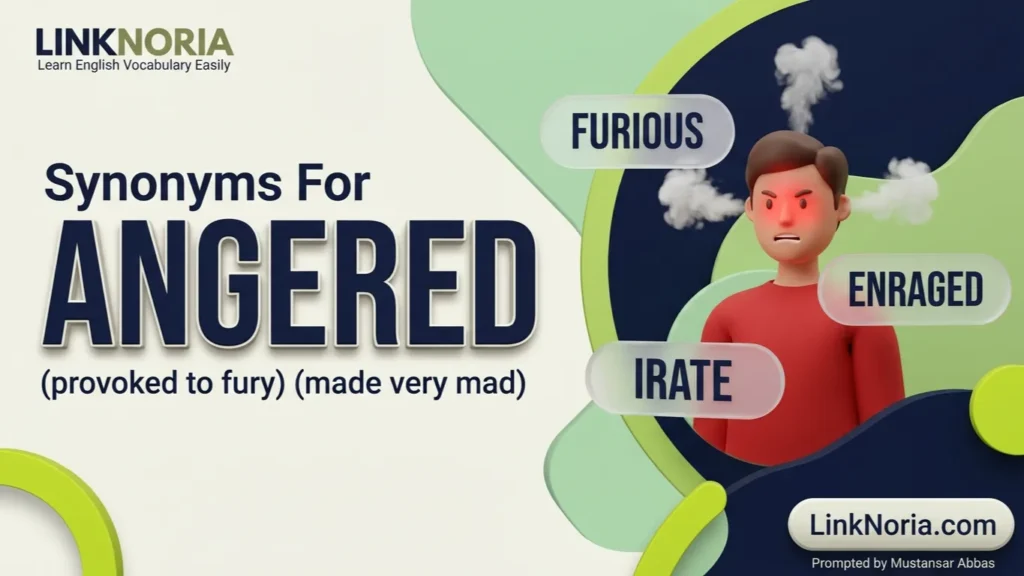
The word “angered” describes the state of feeling intense displeasure, irritation, or hostility caused by a person, action, or situation.
Imagine a customer receiving a damaged package after waiting weeks for delivery, causing them to react with immediate frustration. The word “angered” captures this emotional shift from calm expectation to sharp, active resentment. It applies to individuals, groups, or crowds experiencing ranging levels of hostility and emotional distress. Expanding your vocabulary beyond this single term allows you to convey exact levels of fury, annoyance, or indignation in your writing.
This article explains the meaning of “angered,” its emotional tone, history, pronunciation, word parts, and 30 useful synonyms with clear examples. By the end, you will know how to talk about it like a confident English speaker.
Meaning of Angered
Definition
“Angered” is an adjective or past-participle verb that means feeling, showing, or made to feel strong displeasure, hostility, or rage.
Simple Meaning
Very mad or upset because of something unfair, hurtful, or annoying.
Connotation
“Angered” carries a negative, intense connotation. It implies an active emotional reaction where peace is disrupted by external causes.
Examples
The manager was visibly angered by the deliberate delay in the project.
She felt angered after reading the dishonest review about her small business.
Etymology
Derived from the Middle English angren and Old Norse angra, meaning to distress, grieve, or vex. The ultimate root traces to Proto-Indo-European *angh-, meaning painfully tight or constricted.
Short History
- Old English (450–1100): Related words like enge meant narrow, tight, or painful.
- Middle English (1100–1500): Borrowed from Old Norse to mean grief, affliction, or trouble.
- Modern English (1500–Present): Shifted entirely from physical pain or grief to emotional wrath and outrage.
Quick Synonym Comparison Table
| Synonym | Intensity | Formality | Primary Context |
| Enraged | Extreme | Neutral | Wild, violent fury |
| Irritated | Mild | Neutral | Slight annoyance |
| Incensed | High | Formal | Outrage over injustice |
| Pissed | High | Informal | Casual daily speech |
Pronunciation & Syllables
- US IPA: /ˈæŋ.ɡɚd/
- UK IPA: /ˈæŋ.ɡəd/
- Syllables: 2 (an-gered)
30 Synonyms for Angered
Learning synonyms for angered helps you describe feelings of frustration and rage with precision.
1. Enraged (adjective)
US /ˈɛn.reɪdʒd/ | UK /ɪnˈreɪdʒd/
Meaning: Filled with violent or extreme anger.
- The enraptured crowd grew enraged when the concert was suddenly canceled.
- An enraged driver began honking loudly during the morning traffic jam.
2. Infuriated (adjective)
US /ɪnˈfjʊr.i.eɪ.tɪd/ | UK /ɪnˈfjʊə.ri.eɪ.tɪd/
Meaning: Made extremely angry or impatient.
- Maria was infuriated by the endless system crashes while filing her reports.
- The deliberate lie infuriated the teacher, prompting an immediate detention.
3. Irritated (adjective)
US /ˈɪr.ə.teɪ.tɪd/ | UK /ˈɪr.ɪ.teɪ.tɪd/
Meaning: Slightly angry, annoyed, or impatient.
- Sam became irritated when his colleague kept tapping a pencil on the desk.
- The noise from the construction site left residents feeling irritated all morning.
4. Annoyed (adjective)
US /əˈnɔɪd/ | UK /əˈnɔɪd/
Meaning: Moderately bothered or displeased.
- She felt annoyed after waiting thirty minutes for a simple phone response.
- The continuous pop-up ads made the website user feel deeply annoyed.
5. Incensed (adjective)
US /ɪnˈsɛnst/ | UK /ɪnˈsɛnst/
Meaning: Very angry, especially due to perceived injustice or insult.
- Citizens were incensed by the sudden increase in local property taxes.
- The author felt incensed when her work was published without proper credit.
6. Outraged (adjective)
US /ˈaʊt.reɪdʒd/ | UK /ˈaʊt.reɪdʒd/
Meaning: Characterized by strong indignation and moral anger.
- Parents were outraged by the school board’s unexpected policy changes.
- The public felt outraged after discovering the corrupt financial dealings.
7. Furious (adjective)
US /ˈfjʊr.i.əs/ | UK /ˈfjʊə.ri.əs/
Meaning: Extremely angry, wild, or fierce in temper.
- Marcus was furious when he found out his bike had been stolen.
- A furious storm raged outside as the captain fought to keep the ship steady.
8. Irate (adjective)
US /aɪˈreɪt/ | UK /aɪˈreɪt/
Meaning: Feeling or characterized by great anger, often expressed formally.
- An irate customer demanded an immediate refund from the manager.
- The senator received hundreds of irate emails from local voters.
9. Indignant (adjective)
US /ɪnˈdɪɡ.nənt/ | UK /ɪnˈdɪɡ.nənt/
Meaning: Angry because of something unfair or unjust.
- The worker gave an indignant reply when accused of laziness.
- She was indignant that her honest mistake led to a harsh punishment.
10. Vexed (adjective)
US /vɛkst/ | UK /vɛkst/
Meaning: Annoyed, frustrated, or worried by ongoing problems.
- The scientist grew vexed after several failed laboratory experiments.
- He spoke in a vexed tone when addressing the constant schedule shifts.
11. Cross (adjective)
US /krɔs/ | UK /krɒs/
Meaning: Mildly annoyed or ill-humored.
- The grandmother looked cross when the children jumped on the sofa.
- Please do not be cross with me for forgetting to buy the milk.
12. Riled (adjective)
US /raɪld/ | UK /raɪld/
Meaning: Irritated or provoked into anger.
- The taunting comments riled the player right before the final game.
- He got riled up after hearing the unfair gossip circulating the office.
13. Mad (adjective)
US /mæd/ | UK /mæd/
Meaning: Angry, annoyed, or furious in everyday usage.
- Jenny was mad at her brother for breaking her favorite coffee mug.
- Don’t stay mad at him for something he did not mean to do.
14. Provoked (adjective)
US /prəˈvoʊkt/ | UK /prəˈvəʊkt/
Meaning: Driven to anger by intentional actions or words.
- The provoked dog barked loudly at the trespassers near the fence.
- He made a harsh comment only after being continuously provoked.
15. Livid (adjective)
US /ˈlɪv.ɪd/ | UK /ˈlɪv.ɪd/
Meaning: Furiously angry to the point of turning pale or red.
- My father was livid when he saw the deep scratch on his new car.
- She was absolutely livid after missing her final connection flight.
16. Fuming (adjective)
US /ˈfjum.ɪŋ/ | UK /ˈfjuː.mɪŋ/
Meaning: Showing silent, intense anger that burns internally.
- Mark sat fuming in the corner after losing the debate match.
- She left the room fuming over the dismissive remark made by her boss.
17. Seething (adjective)
US /ˈsið.ɪŋ/ | UK /ˈsiː.ðɪŋ/
Meaning: Filled with intense, barely contained anger.
- Beneath his calm exterior, he was seething with deep resentment.
- The employee was seething after being passed over for the promotion.
18. Aggravated (adjective)
US /ˈæɡ.rə.veɪ.tɪd/ | UK /ˈæɡ.rə.veɪ.tɪd/
Meaning: Made angry or irritated by repeated trouble.
- The long wait times left patients feeling aggravated in the lobby.
- Repeated disruptions aggravated the speaker during his presentation.
19. Wrathful (adjective)
US /ˈræθ.fəl/ | UK /ˈrɒθ.fəl/
Meaning: Full of intense, vengeful anger.
- The myth described a wrathful deity sending storms across the land.
- He gave a wrathful look to anyone who dared interrupt his work.
20. Apoplectic (adjective)
US /ˌæp.əˈplɛk.tɪk/ | UK /ˌæp.əˈplɛk.tɪk/
Meaning: Overcome with anger to the point of being speechless.
- The owner was apoplectic when he found the shop vandalized.
- He became almost apoplectic over the unfair penalty call.
21. Exasperated (adjective)
US /ɪɡˈzæs.pə.reɪ.tɪd/ | UK /ɪɡˈzɑː.spə.reɪ.tɪd/
Meaning: Intensely irritated and frustrated due to endless issues.
- The teacher let out an exasperated sigh when no one answered.
- After trying five times to fix the sink, he felt exasperated.
22. Peeved (adjective)
US /pivd/ | UK /piːvd/
Meaning: Annoyed or irritated by minor inconveniences.
- Laura was peeved that her seat had been assigned to someone else.
- He looked peeved when the waiter brought the wrong side dish.
23. Pissed (adjective)
US /pɪst/ | UK /pɪst/
Meaning: Informal term for being extremely angry or annoyed.
- Tom was pissed that he lost his keys right before leaving work.
- She got really pissed off after waiting in line for an hour.
24. Miffed (adjective)
US /mɪft/ | UK /mɪft/
Meaning: Slightly annoyed or offended by a perceived slight.
- He felt a bit miffed when he was not invited to the dinner.
- She was miffed by his failure to return her phone call promptly.
25. Galling (adjective)
US /ˈɡɔ.lɪŋ/ | UK /ˈɡɔː.lɪŋ/
Meaning: Causing bitter anger, humiliation, or resentment.
- It was galling to watch the opponent win through dishonest tactics.
- The loss was particularly galling given all their preparation.
26. Resentful (adjective)
US /rɪˈzɛnt.fəl/ | UK /rɪˈzɛnt.fəl/
Meaning: Feeling long-standing bitterness or anger over mistreatment.
- He remained resentful toward his former business partner for years.
- A resentful tone crept into her voice when discussing the past.
27. Choleric (adjective)
US /ˈkɑ.lə.rɪk/ | UK /ˈkɒl.ər.ɪk/
Meaning: Bad-tempered, easily angered, or irritable.
- The old manager had a choleric nature that intimidated new hires.
- His choleric outbursts made it difficult for colleagues to work with him.
28. Bitter (adjective)
US /ˈbɪt.ɚ/ | UK /ˈbɪt.ə/
Meaning: Angry and hurt due to unfair treatment or disappointment.
- She felt bitter after being denied credit for her team contribution.
- A bitter argument erupted between the two rival long-time executives.
29. Spiteful (adjective)
US /ˈspaɪt.fəl/ | UK /ˈspaɪt.fəl/
Meaning: Showing or caused by malicious anger and ill will.
- The petty revenge was driven by spiteful feelings after the fight.
- He made a spiteful comment designed specifically to hurt her pride.
30. Heated (adjective)
US /ˈhi.tɪd/ | UK /ˈhiː.tɪd/
Meaning: Characterized by intense passion, anger, or strong emotion.
- The politicians engaged in a heated debate over the new legislation.
- A heated exchange occurred outside the courtroom following the verdict.
Quick Synonym Comparison Table
| Synonym | Nuance / Shade | Formality Level | Common Context |
| Enraged | Extreme rage, violent anger | Neutral | Crimes, severe betrayals |
| Irritated | Low-level annoyance | Neutral | Delays, minor pet peeves |
| Indignant | Moral outrage over unfairness | Formal | Injustice, false accusations |
| Livid | Explosive, visible fury | Informal | Disobedience, destroyed property |
| Resentful | Quiet, long-lasting bitterness | Neutral | Past conflicts, unfairness |
| Cross | Minor, temporary irritation | British / Neutral | Parenting, minor mistakes |
Synonyms by Context / Usage
Formal
- Irate: Used in official customer reports, business correspondence, or formal writing.
- Indignant: Fits academic essays, law, and moral arguments.
Informal
- Pissed: Common in casual conversations among friends.
- Mad: Standard daily spoken English in the US.
Emotional & Literary
- Seething: Highlights hidden, boiling inner anger.
- Wrathful: Fits fictional stories, historical tales, or religious texts.
Example Sentences Using the Synonyms
- Enraged: The enraged bull charged directly toward the wooden barrier.
- Incensed: She was incensed by the misleading terms written in the contract.
- Livid: The coach was livid after the team committed three errors in a row.
- Peeved: He felt slightly peeved when no one saved him a seat.
- Resentful: The unfair division of labor made the staff feel resentful.
Parts of Speech
| Base Word | Part of Speech | Example Usage |
| Anger | Noun | He tried to hold back his growing anger. |
| Anger | Verb | Bad news will anger the investor group. |
| Angered | Adjective / Past Participle | The angered crowd gathered outside the hall. |
| Angrily | Adverb | She slammed the door angrily behind her. |
Antonyms of Angered
- Pleased (adjective): Feeling or showing pleasure and satisfaction.
- Delighted (adjective): Extremely pleased and filled with joy.
- Calm (adjective): Peaceful, quiet, and free from agitation.
- Appeased (adjective): Pacified or satisfied by yielding to demands.
- Content (adjective): Satisfied with how things are without complaints.
When to Use Which Synonym
| Tone Goal | Recommended Word | Word to Avoid |
| Describe a furious boss | Livid or Irate | Cross (too mild) |
| Describe minor daily annoyances | Irritated or Peeved | Wrathful (too intense) |
| Express moral outrage in writing | Indignant | Pissed (too informal) |
Affixation Pattern
- Root: Anger (grief, distress, or wrath).
- Prefix: None.
- Suffix: -ed (forms past participle or descriptive adjective).
- Origin: Old Norse angra via Middle English angren.
Word Formation
- Verb: Anger (US /ˈæŋ.ɡɚ/ | UK /ˈæŋ.ɡə/) 2 Syllables
- Noun: Anger (US /ˈæŋ.ɡɚ/ | UK /ˈæŋ.ɡə/) 2 Syllables
- Adjective: Angry (US /ˈæŋ.ɡri/ | UK /ˈæŋ.ɡri/) 2 Syllables
- Adverb: Angrily (US /ˈæŋ.ɡrə.li/ | UK /ˈæŋ.ɡrɪ.li/) 3 Syllables
Prototype Meaning
The prototype mental image of “angered” is a person whose face flushes, muscles tense, and voice sharpens upon experiencing a clear, sudden offense or frustration. It represents an active internal or external reaction to a negative trigger.
It does not imply permanent malice, clinical depression, physical weakness, or passive sadness.
Prototype Categorization
- Mild Annoyance: Irritated, annoyed, peeved, miffed.
- Moderate Displeasure: Angered, mad, cross, vexed.
- Strong Outrage: Incensed, indignant, outraged, irate.
- Extreme Rage: Enraged, infuriated, livid, furious, apoplectic.
Grouping synonyms by emotional intensity helps writers choose words that match the exact scene without exaggerating or understating the emotion.
Common Usage Mistakes
- Confusing anger with sadness: Using “angered” when someone is simply heartbroken or disappointed.
- Overusing extreme words: Calling a small delay “apoplectic” when “irritated” is accurate.
- Incorrect preposition: Saying “angered on” instead of “angered by” or “angered at.”
Connotative Meaning
- Positive: None.
- Negative: Strong negative emotional energy involving hostility, frustration, or wrath.
- Neutral: Objective descriptions of human emotional reactions in psychology or news reports.
(Connotation refers to the implied feeling or cultural association a word carries beyond its literal definition.)
Short Questions and Answers
What does the word “angered” mean?
The word “angered” means aroused to anger or made very displeased by something. It describes a person or group experiencing an emotional state of strong irritation or hostility caused by a specific trigger.
What are 5 synonyms for angry?
Five common synonyms for angry are furious, enraged, irate, incensed, and annoyed. These words range from mild irritation to extreme, wild rage.
What are the 10 synonyms?
Ten synonyms for angered include enraged, infuriated, irritated, annoyed, incensed, outraged, furious, irate, indignant, and vexed.
What are 5 strong synonyms?
Five strong, high-intensity synonyms are enraged, infuriated, livid, apoplectic, and incensed. These terms communicate severe or uncontrollable fury.
How do formal and informal synonyms for angered differ in tone?
Formal synonyms like “indignant” or “irate” suit professional writing, while informal terms like “pissed” belong in casual speech. Choosing the right tone prevents your writing from sounding too harsh or overly casual.
What is the difference between angered and indignant?
“Angered” describes general displeasure, while “indignant” specifically implies anger caused by unfair or unjust treatment. Indignation carries a clear sense of moral offense.
What is the correct preposition to use after anger?
The most common prepositions used after “angered” are “by” or “at”. For example, you say someone was “angered by the decision” or “angered at the delay.”
Conclusion
Mastering synonyms for “angered” improves your writing clarity and allows you to express precise emotional levels. Knowing when to use mild words like “irritated” versus intense words like “livid” makes your descriptions far more effective.
Practice using two new synonyms in your daily writing or speaking today to build your vocabulary confidence!
Quiz about “Angered”
1. Which of the following is a direct synonym for an angered person?
a) Content
b) Enraged
c) Pacified
d) Serene
2. Fill in the blank: How is “angered” correctly used in a sentence?
“The sudden price hike __________ the local customers.”
a) angered
b) angrily
c) angering
d) angerous
3. What is the correct relationship between these anger synonyms and antonyms?
a) Furious / Calm (Antonyms)
b) Irate / Enraged (Antonyms)
c) Irritated / Annoyed (Antonyms)
d) Pleased / Delighted (Synonyms of angered)
4. What is the correct US angered pronunciation in IPA?
a) /ˈæŋ.ɡɚd/
b) /æŋˈɡrili/
c) /ˈæŋ.ɡɚ/
d) /ənˈɡrɪd/
5. Which word describes someone who is easily angered?
a) Choleric
b) Content
c) Calm
d) Placid
6. What is an angriest synonym that shows maximum rage?
a) Mild
b) Cross
c) Apoplectic
d) Peeved
7. Which word is a valid angered anagram?
a) Enraged
b) Derange
c) Redrange
d) Grandee
8. Which consumed synonym matches the idea of being eaten up by anger?
a) Overwhelmed
b) Refreshing
c) Pleased
d) Ignored
Answers
- b) Enraged It describes a person experiencing intense anger.
- a) angered Works as the simple past tense verb.
- a) Furious / Calm (Antonyms) Furious means angry, and calm means peaceful.
- a) /ˈæŋ.ɡɚd/ Standard US phonetic transcription.
- a) Choleric Means bad-tempered or easily provoked to anger.
- c) Apoplectic Represents extreme, speechless rage.
- b) Derange Uses the exact same letters (a-n-g-e-r-e-d) rearranged.
- a) Overwhelmed Refers to being completely taken over or consumed by an emotion.

Mustansar Abbas is the author and founder of Linknoria.com, where he writes practical, well-researched guides on technology, productivity, and digital tools to help readers make smarter, more informed decisions.