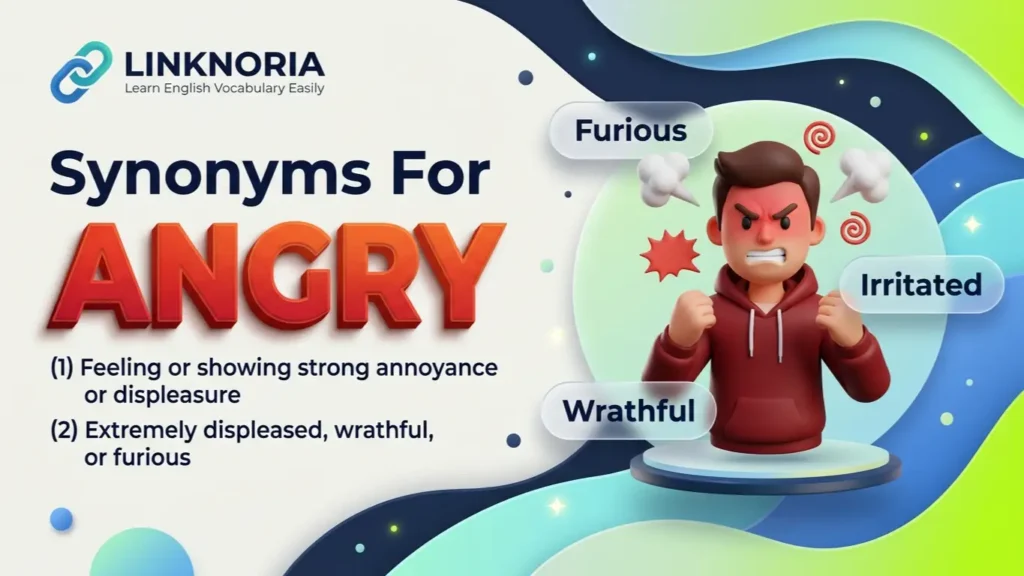
Angry means feeling or showing strong annoyance, displeasure, or hostility toward someone or something. The feeling can range from mild irritation over a small problem to intense rage caused by a serious insult or unfair situation.
This article explains the meaning of angry and introduces 30 useful synonyms and expressions, with US and UK pronunciations, simple meanings, and natural examples. You will also learn how to choose the right word, understand different levels of anger, and avoid common vocabulary mistakes.
Meaning of Angry
Definition: Angry is an adjective that describes someone who feels or shows strong annoyance, displeasure, or hostility.
Simple meaning: You feel angry when something upsets you, frustrates you, hurts your feelings, or seems unfair.
Examples:
- She was angry when she discovered that someone had taken her phone without asking.
- The customers were angry about the unexpected price increase.
Emotional tone: Angry usually has a negative connotation because it describes an unpleasant emotion. However, anger can be a reasonable response to injustice or mistreatment.
Pronunciation: US: /ˈæŋɡri/ | UK: /ˈæŋɡri/
Syllables: 2 — an-gry.
30 Synonyms for Angry
The best synonym depends on how intense the anger is, what caused it, and the situation in which you are using the word.
Mild Irritation
These words describe lighter anger, annoyance, or displeasure.
1. Annoyed (adjective)
US: /əˈnɔɪd/ | UK: /əˈnɔɪd/
Meaning: Slightly angry or bothered by something irritating or inconvenient.
Examples:
- He was annoyed by the constant noise outside his bedroom.
- She felt annoyed when her colleague interrupted her again.
2. Irritated (adjective)
US: /ˈɪrɪteɪtɪd/ | UK: /ˈɪrɪteɪtɪd/
Meaning: Bothered or made impatient by something unpleasant, especially when it happens repeatedly.
Examples:
- The teacher looked irritated by the students’ constant talking.
- I became irritated when the website stopped working for the third time.
3. Miffed (adjective, informal)
US: /mɪft/ | UK: /mɪft/
Meaning: Slightly offended or annoyed, often because of a small personal disappointment.
Examples:
- He was miffed that nobody invited him to the party.
- She seemed miffed when her friend forgot their lunch plans.
4. Peeved (adjective, informal)
US: /piːvd/ | UK: /piːvd/
Meaning: Annoyed or irritated, usually by something relatively minor.
Examples:
- I was peeved when the delivery arrived two hours late.
- He felt peeved that his favorite program had been cancelled.
5. Vexed (adjective)
US: /vekst/ | UK: /vekst/
Meaning: Annoyed, troubled, or frustrated by a difficult or irritating problem.
Examples:
- She looked vexed by the complicated instructions.
- The manager was vexed by the repeated errors in the report.
6. Cross (adjective, mainly British English)
US: /krɔːs/ | UK: /krɒs/
Meaning: Annoyed or angry, often in an everyday or mildly disapproving way.
Examples:
- Dad was cross with me for coming home late.
- She was cross because her brother had borrowed her bicycle without permission.
Frustration and Resentment
These words describe anger caused by obstacles, repeated problems, disappointment, or perceived unfair treatment.
7. Frustrated (adjective)
US: /ˈfrʌstreɪtɪd/ | UK: /frʌˈstreɪtɪd/
Meaning: Upset or angry because something prevents you from achieving what you want.
Examples:
- He felt frustrated after several unsuccessful job applications.
- The players were frustrated because they could not score.
8. Mad (adjective, informal)
US: /mæd/ | UK: /mæd/
Meaning: Angry or upset; commonly used in everyday American English.
Examples:
- Are you mad at me for forgetting your birthday?
- She got mad when the shop refused to replace the damaged item.
9. Exasperated (adjective)
US: /ɪɡˈzæspəreɪtɪd/ | UK: /ɪɡˈzɑːspəreɪtɪd/
Meaning: Extremely annoyed or impatient after dealing with repeated difficulties.
Examples:
- The exasperated driver sighed as the traffic remained at a standstill.
- She was exasperated after explaining the same instructions several times.
10. Resentful (adjective)
US: /rɪˈzentfəl/ | UK: /rɪˈzentfəl/
Meaning: Feeling lasting bitterness or anger because you believe you have been treated unfairly.
Examples:
- He became resentful when his colleague received credit for his work.
- She felt resentful because her brother was always given special treatment.
11. Indignant (adjective)
US: /ɪnˈdɪɡnənt/ | UK: /ɪnˈdɪɡnənt/
Meaning: Angry because something seems unfair, insulting, or morally wrong.
Examples:
- The residents were indignant about the unfair rent increase.
- She gave an indignant response when someone questioned her honesty.
12. Bitter (adjective)
US: /ˈbɪtər/ | UK: /ˈbɪtə/
Meaning: Feeling deep resentment, disappointment, or anger that may continue over time.
Examples:
- He remained bitter about losing the opportunity he had worked toward.
- Years of unfair treatment left her bitter and disappointed.
13. Heated (adjective)
US: /ˈhiːtɪd/ | UK: /ˈhiːtɪd/
Meaning: Full of strong emotion, often anger, especially when describing an argument or discussion.
Examples:
- A heated argument broke out over the proposed changes.
- The two colleagues had a heated discussion about the deadline.
Usage note: Heated usually describes a situation, argument, exchange, or discussion rather than directly describing a person’s emotional state.
Intense Anger and Rage
These words describe strong anger, from serious displeasure to extreme fury.
14. Furious (adjective)
US: /ˈfjʊriəs/ | UK: /ˈfjʊəriəs/
Meaning: Extremely angry because of something upsetting, offensive, or unacceptable.
Examples:
- My supervisor was furious when he discovered the missing information.
- She was furious that her private messages had been shared.
15. Enraged (adjective)
US: /ɪnˈreɪdʒd/ | UK: /ɪnˈreɪdʒd/
Meaning: Made extremely angry by an action, event, or situation.
Examples:
- The unfair decision enraged the supporters.
- He was enraged when he learned that someone had damaged his car.
16. Livid (adjective)
US: /ˈlɪvɪd/ | UK: /ˈlɪvɪd/
Meaning: Extremely angry, often because of a serious insult, betrayal, or disappointment.
Examples:
- She was livid when she discovered that he had lied to her.
- The customer was absolutely livid about the service.
17. Infuriated (adjective)
US: /ɪnˈfjʊrieɪtɪd/ | UK: /ɪnˈfjʊərieɪtɪd/
Meaning: Made extremely angry by something someone did or something that happened.
Examples:
- The passengers were infuriated by the airline’s lack of communication.
- His careless remarks infuriated everyone in the room.
18. Irate (adjective)
US: /aɪˈreɪt/ | UK: /aɪˈreɪt/
Meaning: Very angry, often in a formal situation or when making a complaint.
Examples:
- An irate customer demanded to speak with the manager.
- The company received several complaints from irate passengers.
19. Incensed (adjective)
US: /ɪnˈsenst/ | UK: /ɪnˈsenst/
Meaning: Extremely angry, especially because something seems deeply unfair or offensive.
Examples:
- She was incensed by the company’s decision to ignore the complaints.
- Local residents were incensed when the public park closed without warning.
20. Outraged (adjective)
US: /ˈaʊtreɪdʒd/ | UK: /ˈaʊtreɪdʒd/
Meaning: Extremely angry and shocked by something considered unjust, cruel, or unacceptable.
Examples:
- Parents were outraged by the sudden cancellation of school services.
- The public was outraged when the evidence was deliberately concealed.
21. Fuming (adjective)
US: /ˈfjuːmɪŋ/ | UK: /ˈfjuːmɪŋ/
Meaning: Feeling or showing intense anger, often while trying not to express it openly.
Examples:
- He was still fuming about the way his manager had treated him.
- She sat quietly, fuming over the unfair accusation.
22. Seething (adjective)
US: /ˈsiːðɪŋ/ | UK: /ˈsiːðɪŋ/
Meaning: Filled with powerful anger that is often hidden beneath a calm appearance.
Examples:
- She was seething with anger after the meeting.
- He remained outwardly calm but was seething inside.
23. Raging (adjective)
US: /ˈreɪdʒɪŋ/ | UK: /ˈreɪdʒɪŋ/
Meaning: Showing or involving powerful, uncontrolled anger; also used for something intense or violent, such as a storm.
Examples:
- A raging argument broke out between the neighbors.
- He was raging about the decision long after the meeting ended.
24. Wrathful (adjective)
US: /ˈræθfəl/ | UK: /ˈrɒθfəl/
Meaning: Full of intense anger or wrath; often used in literary, dramatic, or formal writing.
Examples:
- The wrathful king demanded an explanation from his advisers.
- The character feared her father’s wrathful response.
25. Apoplectic (adjective)
US: /ˌæpəˈplɛktɪk/ | UK: /ˌæpəˈplɛktɪk/
Meaning: Extremely angry, often to the point of appearing unable to speak calmly.
Examples:
- She was apoplectic with rage when she saw the damage.
- The manager was apoplectic after discovering the serious mistake.
26. Incandescent (adjective, in the expression “incandescent with rage”)
US: /ˌɪnkænˈdesənt/ | UK: /ˌɪnkænˈdesənt/
Meaning: Extremely angry; this is a figurative use of a word that literally refers to something glowing with heat or light.
Examples:
- He was incandescent with rage when he discovered the deception.
- The coach was incandescent after the team ignored his instructions.
Anger Expressions and Idioms
These expressions describe anger in a more colorful or conversational way. They are not always interchangeable with the adjective angry.
27. Hot Under the Collar (idiom)
US: /ˌhɑːt ʌndər ðə ˈkɑːlər/ | UK: /ˌhɒt ʌndə ðə ˈkɒlə/
Meaning: Becoming angry, irritated, or embarrassed, especially during a tense conversation.
Examples:
- He got hot under the collar when his mistake was mentioned.
- The discussion made several members of the audience hot under the collar.
28. Seeing Red (idiom)
US: /ˌsiːɪŋ ˈred/ | UK: /ˌsiːɪŋ ˈred/
Meaning: Becoming extremely angry, sometimes so suddenly that it is difficult to think calmly.
Examples:
- She was seeing red when she discovered that her car had been scratched.
- His insulting comment had me seeing red.
29. Up in Arms (idiom)
US: /ˌʌp ɪn ˈɑːrmz/ | UK: /ˌʌp ɪn ˈɑːmz/
Meaning: Very angry and often ready to protest or oppose something strongly.
Examples:
- Residents were up in arms over the proposed highway.
- Parents were up in arms when the school announced the unexpected fee.
30. On the Warpath (idiom)
US: /ɑːn ðə ˈwɔːrpæθ/ | UK: /ɒn ðə ˈwɔːpɑːθ/
Meaning: Very angry and ready to confront or criticize someone.
Examples:
- The principal was on the warpath after the students damaged the classroom.
- My supervisor was on the warpath when the report arrived late.
How Strong Are These Synonyms?
Not every synonym for angry has the same intensity. Use this guide to choose a word that matches the situation.
- Mild anger: annoyed, irritated, miffed, peeved, vexed, cross.
- Frustration and resentment: frustrated, mad, exasperated, resentful, indignant, bitter.
- Strong anger: furious, enraged, livid, infuriated, irate, incensed, outraged.
- Hidden or continuing anger: fuming, seething.
- Dramatic or literary anger: wrathful, apoplectic, incandescent with rage.
- Anger-related expressions: heated, hot under the collar, seeing red, up in arms, on the warpath.
These groups are approximate. The intensity of a word can change with the situation, the speaker, and the way the word is used.
How to Choose the Right Synonym for Angry
1. Match the intensity. Use annoyed for a small inconvenience and furious for a serious offense. Choosing the right intensity makes your writing more believable.
2. Consider the cause. Frustrated often describes blocked goals, resentful suggests lasting bitterness, and indignant emphasizes anger about unfairness.
3. Match the situation. Irate is common in formal complaints, while mad, miffed, and peeved are more conversational.
4. Think about how the anger appears. Someone who is seething may hide their anger, while someone who is seeing red may be overwhelmed by it.
5. Avoid repeating the same word. In a paragraph, use a synonym only when it conveys the right meaning. A precise word is better than a different word chosen merely to avoid repetition.
Antonyms of Angry
Antonyms are words with opposite or contrasting meanings. These words describe calmness, satisfaction, or positive feelings rather than anger.
- Calm (adjective): Peaceful and not emotionally upset.
- Peaceful (adjective): Free from conflict, disturbance, or anger.
- Serene (adjective): Calm, composed, and untroubled.
- Content (adjective): Satisfied with a situation or what you have.
- Pleased (adjective): Feeling happy or satisfied about something.
- Delighted (adjective): Extremely pleased or happy.
Examples:
- Instead of becoming angry, she remained calm and discussed the problem.
- He was pleased with the solution and no longer felt frustrated.
Common Mistakes When Using Synonyms for Angry
Using “annoyed” and “furious” as if they mean the same thing: Both describe anger, but furious is much stronger. Choose the word that matches the situation.
Confusing anger with frustration: Frustration often comes from being unable to achieve a goal. Anger can result from many other causes, including insults, unfair treatment, or betrayal.
Using “heated” to describe a person directly: It is more natural to say “a heated argument” than “a heated person” when you mean someone is angry.
Treating every idiom as a direct synonym: Someone who is up in arms is usually protesting or strongly opposing something. The expression conveys more than a person’s emotional state alone.
Using advanced words in everyday conversation unnecessarily: Words such as apoplectic and incandescent with rage can be effective in expressive writing, but very angry or furious may sound more natural in ordinary conversation.
Frequently Asked Questions
What is the most common synonym for angry?
Mad, annoyed, irritated, and upset are common alternatives, depending on the situation. Mad is especially common in American English, while annoyed often describes a milder level of anger.
What is a stronger word than angry?
Furious, enraged, livid, incensed, and apoplectic can express stronger anger. Their meanings differ slightly: outraged often emphasizes injustice, while apoplectic suggests an extreme, almost speechless reaction.
What is a milder word than angry?
Annoyed, irritated, miffed, and peeved often describe milder forms of anger. They are useful when something bothers you but does not make you intensely angry.
What is the difference between angry and frustrated?
Angry describes a broad feeling of displeasure or hostility. Frustrated usually describes the irritation or disappointment that occurs when something blocks your progress or prevents you from achieving a goal.
What is a formal synonym for angry?
Irate, indignant, incensed, and outraged can work in formal writing. The best choice depends on the context: irate often describes an angry person making a complaint, while indignant emphasizes a reaction to perceived unfairness.
What are some informal synonyms for angry?
Mad, miffed, peeved, and cross are useful informal alternatives. Remember that cross is more common in British English, while mad is widely used to mean angry in American English.
What is the opposite of angry?
There is no single perfect opposite for every use of angry. Calm, peaceful, and serene describe the absence of anger, while pleased and delighted describe positive emotional states.
Conclusion
Learning synonyms for angry helps you express emotions more clearly and choose words that fit different situations. Mild terms such as annoyed and peeved describe everyday irritation, while furious, livid, and enraged communicate much stronger feelings. Expressions such as seeing red and on the warpath add a more conversational or vivid style.
The key is to consider the intensity of the emotion, its cause, and the setting in which you are speaking or writing. Practice using a few of these words in your own sentences, and you will gradually develop a more precise and natural English vocabulary.

Mustansar Abbas is the author and founder of Linknoria.com, where he writes practical, well-researched guides on technology, productivity, and digital tools to help readers make smarter, more informed decisions.