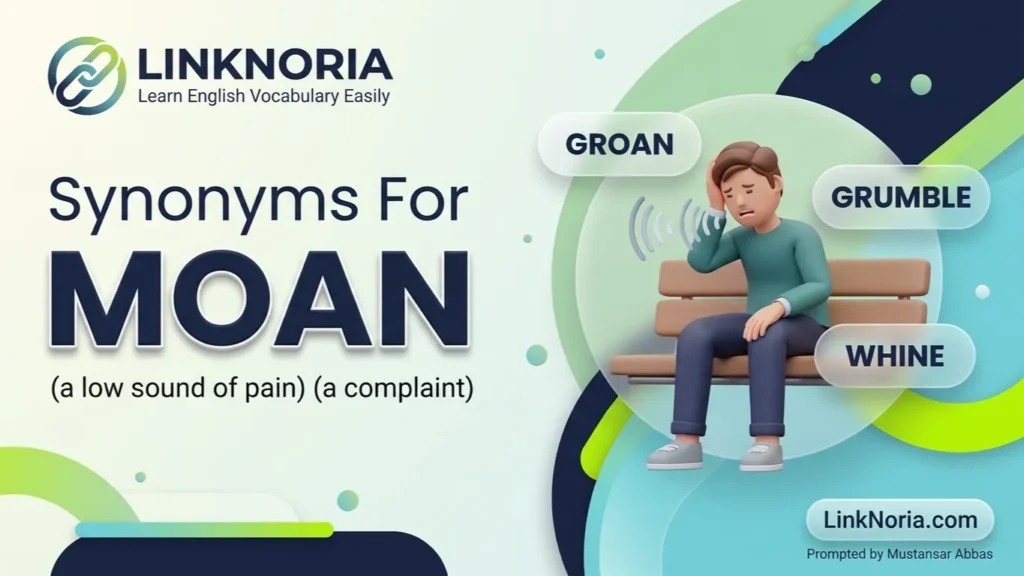
A moan is a long, low sound expressing physical pain, mental suffering, or vocal dissatisfaction.
Imagine sitting in a waiting room when someone nearby exhales a low vocal sound while holding an injured wrist. That involuntary sound gives immediate voice to physical discomfort without using structured words.
To moan means to make a low inarticulate sound from distress or to complain persistently about minor annoyances. Humans and animals make this vocal sound, and metaphorically winds or wooden structures make similar creaking noises.
Learning varied synonyms for “moan” helps you describe vocal expressions of pain, petty complaints, soft sighs, or atmospheric sounds with exact precision.
This article explains the meaning of “moan,” its emotional tone, history, pronunciation, word parts, and 30 useful synonyms with clear examples. By the end, you will know how to talk about it like a confident English speaker.
Meaning of Moan
Definition
A low, prolonged sound uttered from physical pain, grief, or dissatisfaction, or the act of complaining.
Simple Meaning
A low sound made when in pain or complaining about something.
Connotation
Generally negative when expressing pain, suffering, or irritating complaints, though it can carry a neutral or positive tone when describing pleasure or atmospheric sounds.
Examples
The injured hiker uttered a faint moan when paramedics lifted him onto the stretcher.
Stop moaning about the rain and focus on finishing your indoor chores.
Etymology
Derived from Old English mænan, meaning to complain, mourn, or intend. It shares historical Germanic roots associated with vocalizing sorrow.
Short History
- Old English (450–1100): Existed as mænan, which primarily meant to mourn, lament, or express grief aloud.
- Middle English (1100–1500): Evolved into monen or manen, expanding to describe low vocal sounds of physical pain and suffering.
- Modern English (1500–Present): Shifted to its modern spelling and expanded further in the nineteenth century to mean petty complaining or whining.
Quick Synonym Comparison Table
| Synonym | Formality | Primary Context | Key Distinction |
| Groan | Neutral | Physical Pain | A deeper, harsher vocal sound caused by severe strain or agony. |
| Gripe | Informal | Discontent | Persistent, annoying complaints about minor everyday issues. |
| Lament | Formal | Sorrow / Grief | A deeply expressive articulation of profound grief or loss. |
| Whimper | General | Fear / Weakness | Soft, broken vocal sounds expressing distress or fear. |
Pronunciation
- US: /moʊn/
- UK: /məʊn/
Syllables
1 syllable (moan)
30 Synonyms for Moan
Selecting the right synonym helps convey whether a sound stems from genuine physical suffering, irritating dissatisfaction, or poetic atmosphere.
1. Groan (verb)
/ɡroʊn/ | /ɡrəʊn/
Meaning: To make a deep, inarticulate sound conveying pain, despair, or disapproval.
Examples:
- Patients often groan when moving right after major surgery.
- The audience began to groan at the speaker’s corny jokes.
2. Whimper (verb)
/ˈwɪmpər/ | /ˈwɪmpə/
Meaning: To make a series of low, feeble sounds expressive of fear or pain.
Examples:
- The frightened puppy started to whimper under the kitchen table.
- She could only whimper in pain until help arrived.
3. Lament (verb)
/ləˈment/ | /ləˈment/
Meaning: To express passionate grief, sorrow, or regret aloud.
Examples:
- The community gathered to lament the tragic loss of their historical library.
- Poets frequently lament the fleeting nature of youth and beauty.
4. Gripe (verb)
/ɡraɪp/ | /ɡraɪp/
Meaning: To complain persistently and irritably about minor matters.
Examples:
- Workers continue to gripe about the brief lunch break allotment.
- He will gripe about the long line at the grocery store.
5. Whine (verb)
/waɪn/ | /waɪn/
Meaning: To utter a high-pitched, complaining cry or sound.
Examples:
- Children sometimes whine when they feel tired or bored during long trips.
- The jet engine began to whine as it gained mechanical power.
6. Grumble (verb)
/ˈɡrʌmbl/ | /ˈɡrʌmbl/
Meaning: To complain in a low, mumbling, and discontented voice.
Examples:
- Commuters grumble every time train ticket prices increase without notice.
- His stomach started to grumble after skipping breakfast entirely.
7. Murmur (verb)
/ˈmɜːrmər/ | /ˈmɜːmə/
Meaning: To utter a low, continuous, and soft sound expressing emotion or thought.
Examples:
- The sick child began to murmur softly in her sleep.
- A soft murmur swept through the room as the news broke.
8. Sigh (verb)
/saɪ/ | /saɪ/
Meaning: To emit a long, deep, audible breath expressing relief, sadness, or tiredness.
Examples:
- She could sigh with relief once the difficult exam ended.
- The tired traveler let out a heavy sigh at the airport counter.
9. Cry (verb)
/kraɪ/ | /kraɪ/
Meaning: To utter a loud, vocal sound expressing pain, sorrow, or distress.
Examples:
- The injured athlete began to cry out in distress on the field.
- Victims often cry for assistance during sudden natural emergencies.
10. Bleat (verb)
/bliːt/ | /bliːt/
Meaning: To speak or complain in a weak, plaintive, or foolish manner.
Examples:
- Critics bleat about minor policy details without offering constructive solutions.
- The lost lamb began to bleat loudly across the empty field.
11. Wail (verb)
/weɪl/ | /weɪl/
Meaning: To utter a prolonged, high-pitched cry of pain, grief, or anger.
Examples:
- Relatives began to wail when the sad news was announced.
- An ambulance siren continued to wail through the dark city streets.
12. Howl (verb)
/haʊl/ | /haʊl/
Meaning: To utter a loud, long, mournful sound from pain, grief, or rage.
Examples:
- Strong winter winds howl against the mountain cabin walls at night.
- The patient would howl whenever pressure was applied to his ankle.
13. Bitch (verb)
/bɪtʃ/ | /bɪtʃ/
Meaning: To express discontent or anger through aggressive, vulgar complaining.
Examples:
- Staff members gathered during break to bitch about management decisions.
- It is unproductive to bitch about problems without taking action to fix them.
14. Grouse (verb)
/ɡraʊs/ | /ɡraʊs/
Meaning: To complain or grumble over minor grievances.
Examples:
- Retired officers often grouse about changes to modern military procedures.
- Neighbors grouse constantly regarding local street parking arrangements.
15. Bellyache (verb)
/ˈbeli.eɪk/ | /ˈbeli.eɪk/
Meaning: To complain noisily, persistently, or unnecessarily.
Examples:
- Stop spending time to bellyache and start fixing your mistake.
- Students bellyache whenever extra homework reading gets assigned over weekends.
16. Keen (verb)
/kiːn/ | /kiːn/
Meaning: To wail in grief for a dead person or express sharp sorrow aloud.
Examples:
- Mourners began to keen loudly during the traditional funeral ceremony.
- The wind seemed to keen like a grieving soul through the canyon.
17. Squawk (verb)
/skwɑːk/ | /skwɔːk/
Meaning: To utter a harsh, loud complaint or protest against something.
Examples:
- Taxpayers squawk whenever municipal water rates rise unexpectedly.
- Parrots squawk loudly when strangers approach their enclosure.
18. Carp (verb)
/kɑːrp/ | /kɑːp/
Meaning: To complain continuously about trivial matters in a nagging way.
Examples:
- Reviewers tend to carp about small flaws while ignoring artistic strengths.
- He will carp constantly about the temperature inside the office building.
19. Mutter (verb)
/ˈmʌtər/ | /ˈmʌtə/
Meaning: To speak indistinctly in low tones, often to voice private irritation.
Examples:
- Unhappy employees mutter complaints as they return to their desks.
- She continued to mutter under her breath about the unfair grade.
20. Snicker (verb)
/ˈsnɪkər/ | /ˈsnɪkə/
Meaning: To make a smothered, half-suppressed noise of disrespect or mockery.
Examples:
- Students snicker quietly whenever the teacher stumbles over difficult words.
- Opponents snicker at flawed strategies during competitive matches.
21. Yammer (verb)
/ˈjæmər/ | /ˈjæmə/
Meaning: To make a loud, repetitive, and annoying vocal complaint.
Examples:
- The angry customer began to yammer at the cashier over a missing coupon.
- Birds yammer loudly in the garden during early morning hours.
22. Sough (verb)
/saʊ/ | /sʌf/
Meaning: To make a soft, low, sighing or rustling sound like wind in trees.
Examples:
- Pine branches sough gently as autumn breezes pass through the valley.
- Wind seemed to sough across the empty stone corridors at night.
23. Creak (verb)
/kriːk/ | /kriːk/
Meaning: To make a harsh, high-pitched squeaking or groaning sound under pressure.
Examples:
- Wooden floorboards creak underfoot inside old residential buildings.
- Heavy wooden doors creak loudly when opened slowly on rusted hinges.
24. Utter a Cry (verb phrase)
/ˈʌtər ə kraɪ/ | /ˈʌtə ə kraɪ/
Meaning: To release a sudden vocal sound expressing sudden shock, pain, or distress.
Examples:
- The driver uttered a cry when the vehicle slipped on black ice.
- She turned suddenly and uttered a cry of complete astonishment.
25. Pule (verb)
/pjuːl/ | /pjuːl/
Meaning: To cry weakly or complain in a thin, whining voice.
Examples:
- Sick toddlers pule quietly when their fevers rise overnight.
- The abandoned kitten began to pule for milk in the box.
26. Sound Off (verb phrase)
/saʊnd ɒf/ | /saʊnd ɒf/
Meaning: To express opinions or complaints forcefully and openly in public.
Examples:
- Citizens gathered at town hall to sound off about local taxes.
- Radio callers sound off daily regarding regional transportation delays.
27. Beef (verb)
/biːf/ | /biːf/
Meaning: To complain or raise objections about a specific rule or decision.
Examples:
- Drivers beef about the new speed limit enforced near school zones.
- Workers beefed when management eliminated free coffee in break rooms.
28. Clamor (verb)
/ˈklæmər/ | /ˈklæmə/
Meaning: To make a loud and confused noise, especially in outcry or demand.
Examples:
- Protesters clamor for political reform outside government buildings.
- Fans clamor for autographs outside the stadium gates after matches.
29. Ululate (verb)
/ˈjuːljuleɪt/ | /ˈjʊdjʊleɪt/
Meaning: To howl, wail, or utter a high rhythmic sound as an expression of grief or joy.
Examples:
- Village women ululate rhythmically during traditional wedding celebrations.
- Tribal singers ululate to honor ancestors during ceremonial gatherings.
30. Gasp (verb)
/ɡæsp/ | /ɡɑːsp/
Meaning: To inhale suddenly with an open mouth owing to pain, shock, or pleasure.
Examples:
- The swimmer gasps for air after emerging from freezing lake water.
- Spectators gasp loudly as the acrobat performs a daring leap.
Quick Synonym Comparison Table
| Synonym | Formality Level | Primary Application | Key Nuance |
| Moan | Neutral | Physical Pain / Complaint | Low, continuous sound of suffering or dissatisfaction. |
| Groan | Neutral | Severe Agony / Strain | Deeper, harsher vocal sound caused by heavy pressure. |
| Whimper | Informal | Fear / Helplessness | High-pitched, broken cry showing vulnerability or pain. |
| Lament | Formal / Literary | Deep Mourning | Articulate, passionate expression of severe grief or loss. |
| Gripe | Informal | Annoying Complaints | Irritating, repeated complaints about minor issues. |
| Sigh | Neutral | Exhaustion / Relief | Deep exhale releasing breath rather than harsh vocal tones. |
| Creak | Neutral / Technical | Atmospheric Sound | Non-vocal groan made by inanimate wood or metal structures. |
Synonyms by Context / Usage
- Formal: Lament, Ululate, Clamor.
- Informal: Gripe, Whine, Bellyache, Bitch, Beef, Grouse.
- Academic: Lament, Utter a Cry.
- Professional: Grumble, Sound Off.
- Emotional: Whimper, Wail, Howl, Keen, Sigh.
- Literary: Murmur, Sough, Keen, Pule.
Example Sentences Using the Synonyms
- The injured soldier tried not to groan while medical technicians dressed his arm.
- Unhappy consumers continue to gripe about unexpected monthly service fees.
- Poetic lyrics often lament lost opportunities and broken relationships over time.
- The frightened child began to whimper softly when dark shadows filled the room.
- Tall pine trees sough gently in the cool mountain breeze at sunset.
Parts of Speech
| Word Form | Part of Speech | Example Sentence |
| Moan | Noun | A faint moan echoed down the empty hospital corridor. |
| Moan | Verb | Injured patients may moan softly during routine dressing changes. |
| Moaner | Noun | The chronic moaner complained about every single menu item. |
| Moaning | Adjective | The moaning wind shook loose window frames throughout the night. |
| Moaningly | Adverb | He spoke moaningly about his tough schedule to anyone listening. |
Antonyms of Moan
- Rejoice (verb): To feel or show great joy, delight, or triumph.
- Cheer (verb): To shout encouragingly to express approval, joy, or enthusiasm.
- Praise (verb): To express warm approval or admiration for someone or something.
- Celebrate (verb): To honor a notable day or event with festive social activity.
- Applaud (verb): To show approval by clapping hands or expressing strong verbal support.
When to Use Which Synonym
| Context | Recommended Choice | Avoid Using | Reason |
| Severe Physical Injury | Groan / Wail | Gripe / Bellyache | Severe bodily harm requires vocal descriptors of real pain over petty complaints. |
| Workplace Annoyances | Gripe / Grumble | Keen / Ululate | Minor professional discontent needs informal complaint terms over grief expressions. |
| Mourning or Funerals | Lament / Keen | Bitch / Carp | Funeral sorrow demands respectful, formal words rather than vulgar complaint terms. |
| Wind and Nature Sounds | Sough / Howl | Bellyache / Squawk | Environmental noises require atmospheric verbs describing air motion. |
Affixation Pattern
- Root: Moan (from Old English mænan, meaning to complain or mourn).
- Prefix: None.
- Suffix: None (Base root form).
Word Formation
- Moan (noun/verb): /moʊn/ (US) | /məʊn/ (UK) 1 Syllable
- Moaner (noun): /ˈmoʊnər/ (US) | /ˈməʊnə/ (UK) 2 Syllables
- Moaning (adjective/participle): /ˈmoʊnɪŋ/ (US) | /ˈməʊnɪŋ/ (UK) 2 Syllables
Prototype Meaning
Native speakers visualize an individual giving low, involuntary vocal voice to physical hurt or emotional discomfort. The mental image captures a low sound escaping through an open mouth during moments of physical injury, deep exhaustion, or persistent dissatisfaction. The word “moan” does not imply loud screaming, clear articulate words, or structured formal debate.
Prototype Categorization
- Physical Pain Responses: Groan, Whimper, Utter a Cry, Gasp.
- Petty Discontent: Gripe, Whine, Grumble, Bellyache, Carp, Grouse.
- Profound Grief: Lament, Wail, Howl, Keen, Ululate.
- Soft Air & Atmospheric Sounds: Murmur, Sigh, Sough, Creak.
Grouping synonyms by domain helps writers select precise vocabulary matching medical, casual, or literary contexts.
Common Usage Mistakes
- Confusing “moan” with “groan”: A moan is typically a longer, lower vocal sound, whereas a groan is often shorter, deeper, and harsher.
- Using formal grief words for petty complaints: Describing someone complaining about rain as “lamenting” sounds overly dramatic unless used satirically.
- Misinterpreting inanimate sounds: Using “whimper” for wind sounds sounds unnatural; use “sough” or “howl” instead.
Connotative Meaning
- Positive: Sensual pleasure, deep contentment, relaxed sighing, or intense enjoyment.
- Negative: Physical pain, bodily suffering, irritating dissatisfaction, or petty complaining.
- Neutral: Atmospheric wind sounds, structural creaking, or low vocal murmurs.
(Connotation refers to the emotional feeling or cultural association that a word evokes beyond its literal dictionary definition.)
Short Questions and Answers
What can I say instead of moaning?
You can say “groaning,” “whining,” “complaining,” or “sighing” depending on whether you mean pain or irritation. Words like “griping” work best for informal complaints.
What is another word for “moan”?
Common synonyms include “groan” for physical pain, “gripe” for minor complaints, and “lament” for deep sorrow. “Whimper” works well for soft sounds of distress.
What does “moan” mean in slang?
In slang and modern informal English, “moan” means to whine or complain persistently about minor annoyances. It can also refer informally to vocal expressions of physical pleasure.
What is a word for a soft moan?
A “whimper” or a “murmur” describes a soft moan made in pain, fear, or gentle sleep.
Is “moan” a negative word?
“Moan” carries a negative tone when associated with physical suffering or irritating complaints, but it can be neutral or positive in romantic or atmospheric contexts.
Can inanimate objects moan?
Yes, writers metaphorically describe strong winds, old wooden floors, and creaking ships as moaning when they make low, continuous sounds under pressure.
How does “moan” differ from “whine”?
A moan is a low, drawn-out vocal sound, whereas a whine is higher-pitched, nasal, and usually signals annoying child-like complaining.
Conclusion
Learning synonyms for “moan” enriches your English vocabulary and improves your ability to describe human emotions, physical responses, and atmospheric sounds accurately. Utilizing varied terms ensures your spoken and written language remains vivid and contextually precise.
To strengthen your mastery, practice incorporating two new synonyms from this list into your creative writing or daily speech today.
Quiz about “Moan”
Questions
- Moan synonym pain: Which word best describes a deep, harsh sound uttered during severe physical agony?
(a) Gripe (b) Groan (c) Carp (d) Bleat - Synonyms for moan slang: What informal slang verb means to complain noisily and persistently about everyday rules?
(a) Sough (b) Bellyache (c) Keen (d) Ululate - Synonyms for moan in English: Which term best fits an articulate, formal expression of deep sorrow over a tragic loss?
(a) Lament (b) Snicker (c) Whine (d) Squawk - Soft moan synonym: Which synonym describes a gentle, faint, or broken sound of physical distress or fear?
(a) Howl (b) Whimper (c) Clamor (d) Bitch - Another word for moaning loudly: What verb captures a prolonged, high-pitched, loud cry of intense grief or pain?
(a) Murmur (b) Wail (c) Sigh (d) Mutter - Moan antonyms: Which word acts as a direct opposite of “moan”?
(a) Grumble (b) Rejoice (c) Pule (d) Grouse - Moan in a sentence & moan synonym positive: In the sentence “The wind began to _______ through the valley,” which atmospheric synonym fits best, and what word describes a positive expression of delight?
(a) sough / sigh of pleasure (b) bellyache / gripe (c) squawk / complain (d) carp / whine
Answers
- (b) Groan Groan captures a deep sound of physical pain.
- (b) Bellyache Bellyache is an informal slang verb for persistent complaining.
- (a) Lament Lament represents formal, articulate expressions of profound grief.
- (b) Whimper Whimper specifically describes faint, soft sounds of fear or suffering.
- (b) Wail Wail describes loud, high-pitched cries of severe distress.
- (b) Rejoice Rejoice means expressing joy, serving as an antonym for moaning.
- (a) sough / sigh of pleasure Sough fits wind sounds, and a sigh of pleasure reflects positive connotations.

Mustansar Abbas is the author and founder of Linknoria.com, where he writes practical, well-researched guides on technology, productivity, and digital tools to help readers make smarter, more informed decisions.